Co-construction Series | openKylin Visits Kubuds Technology Shanghai to Jointly Explore the RISC-V Ecosystem
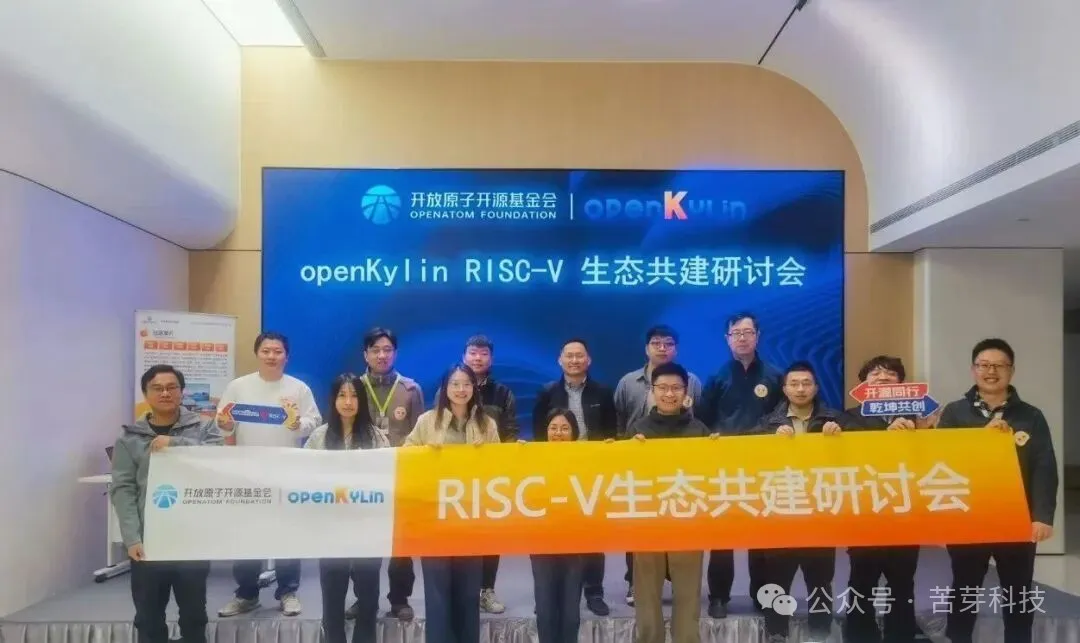
To further enhance friendly exchanges and cooperation discussions among community partners, the OpenAtom openKylin Community Co-creation Series event—”Visiting Shanghai Kubuds for Joint Discussion on the RISC-V Ecosystem”—was successfully held. Representatives from over ten enterprises, including DAMO Academy XuanTie, UltraRISC Technology, Zhihe Computing, SpacemiT, SiFive, and StarFive, gathered at Kubuds. They introduced the progress of RVA23, the current international and domestic RISC-V ecosystem developments and latest achievements, and engaged in in-depth exchanges and communication on topics such as ecosystem co-construction based on RISC-V + openKylin + Kubuds.
Opening Remarks
Li Weiwei, CEO of Shanghai Kubuds, stated: “Thank you very much to the openKylin community for providing Shanghai Kubuds the opportunity to host this openKylin RISC-V + Kubuds ecosystem co-construction event. We also thank all attending guests for participating. In the future, Kubuds will continue to maintain and update the ROS SIG and will also create or join new SIGs as needed by the community, persistently contributing to the RISC-V ecosystem. Finally, we wish this event a complete success and hope the openKylin RISC-V ecosystem grows increasingly prosperous!”
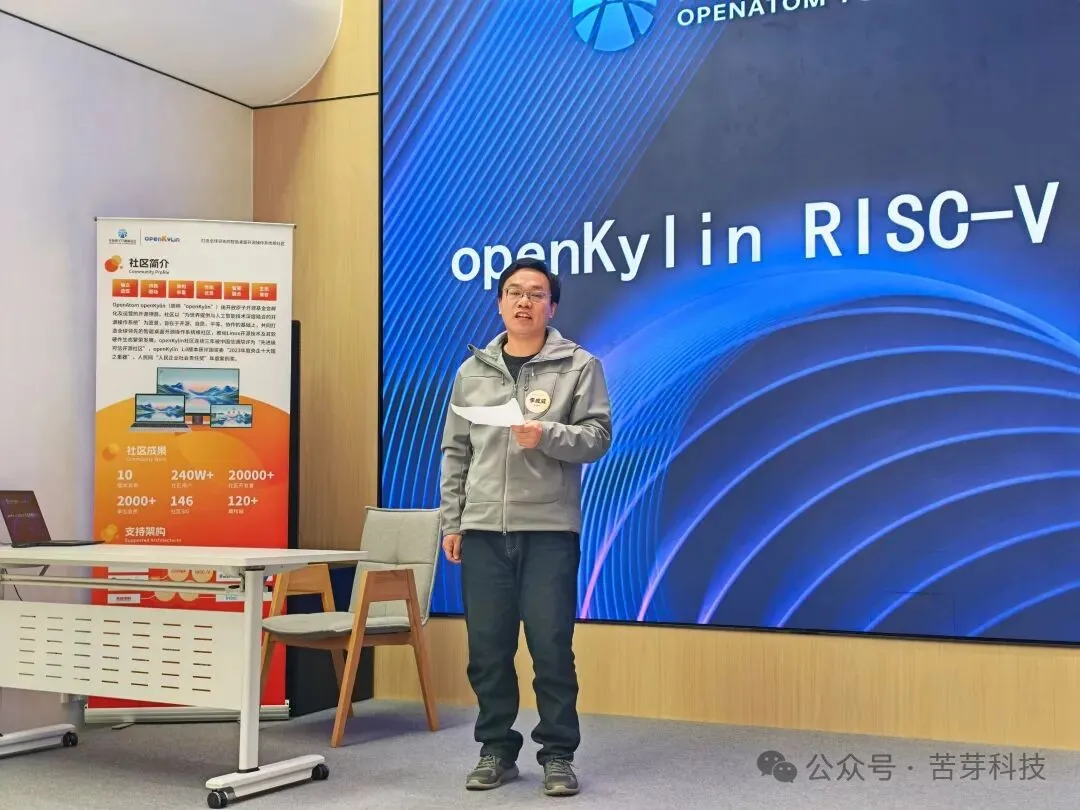
Presentation Session
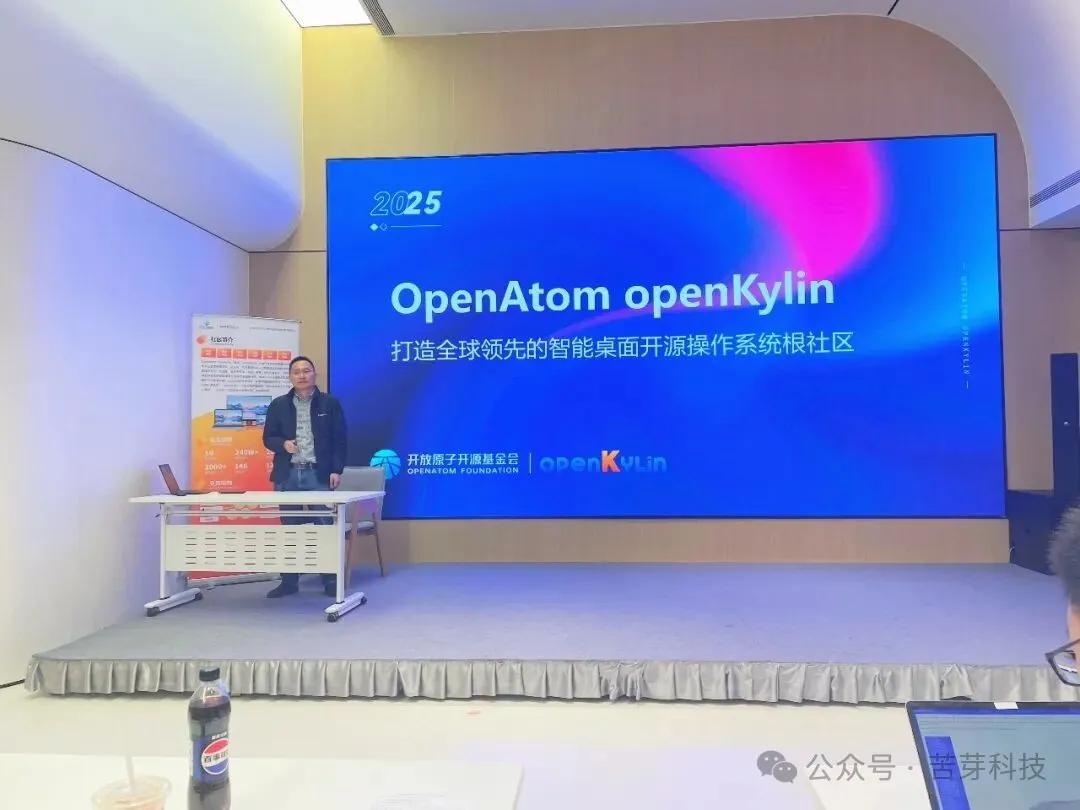
Ma Fajun, Head of Ecosystem Cooperation at the openKylin Community, shared the community’s latest developments, operational model, and key breakthroughs with the attendees. Currently, openKylin is collaborating with over 2000 community partners to jointly create the next generation of operating system technological innovation and a prosperous ecosystem. Looking ahead, with the concerted efforts of all partners, the openKylin community will accelerate its growth, aiming to rank among the world’s top open-source communities and collaboratively forge a globally leading open-source root community for intelligent desktop operating systems.
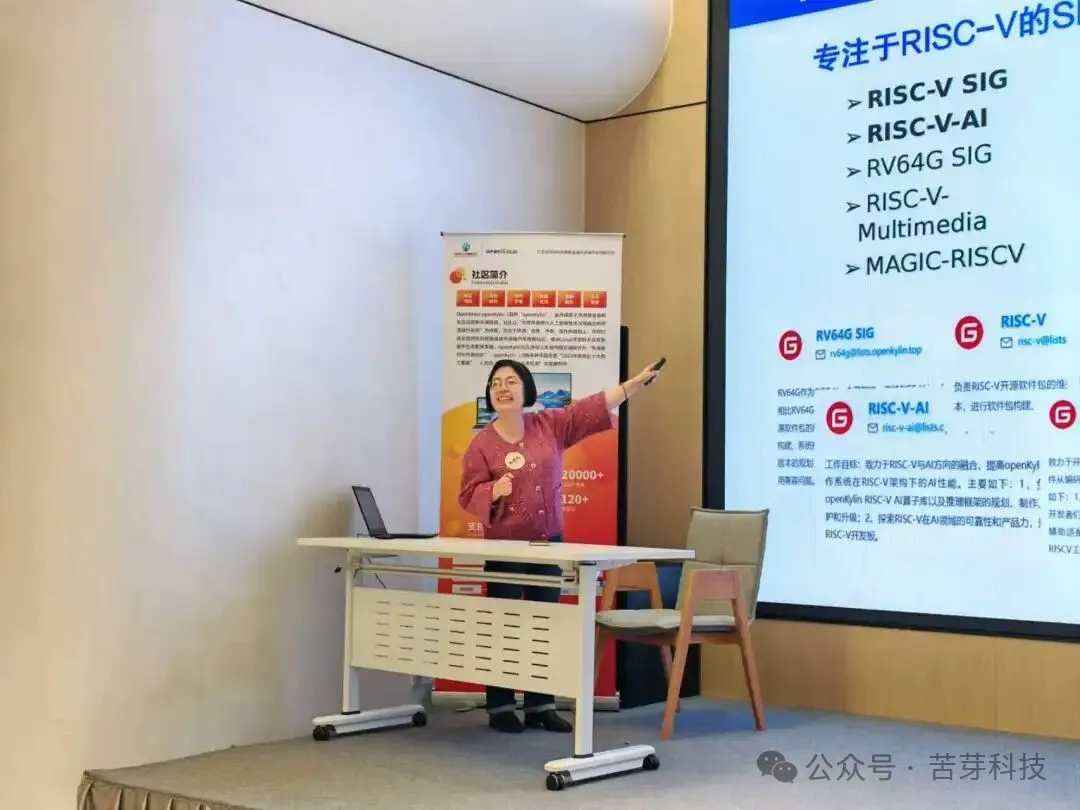
Zhu Xiaohong, Head of Hardware Ecosystem Cooperation at the openKylin Community, shared with the partners the progress and achievements made by openKylin in RISC-V system versions, RVA23 planning, ecosystem development, and AI integration, while also outlining future development plans for RISC-V.
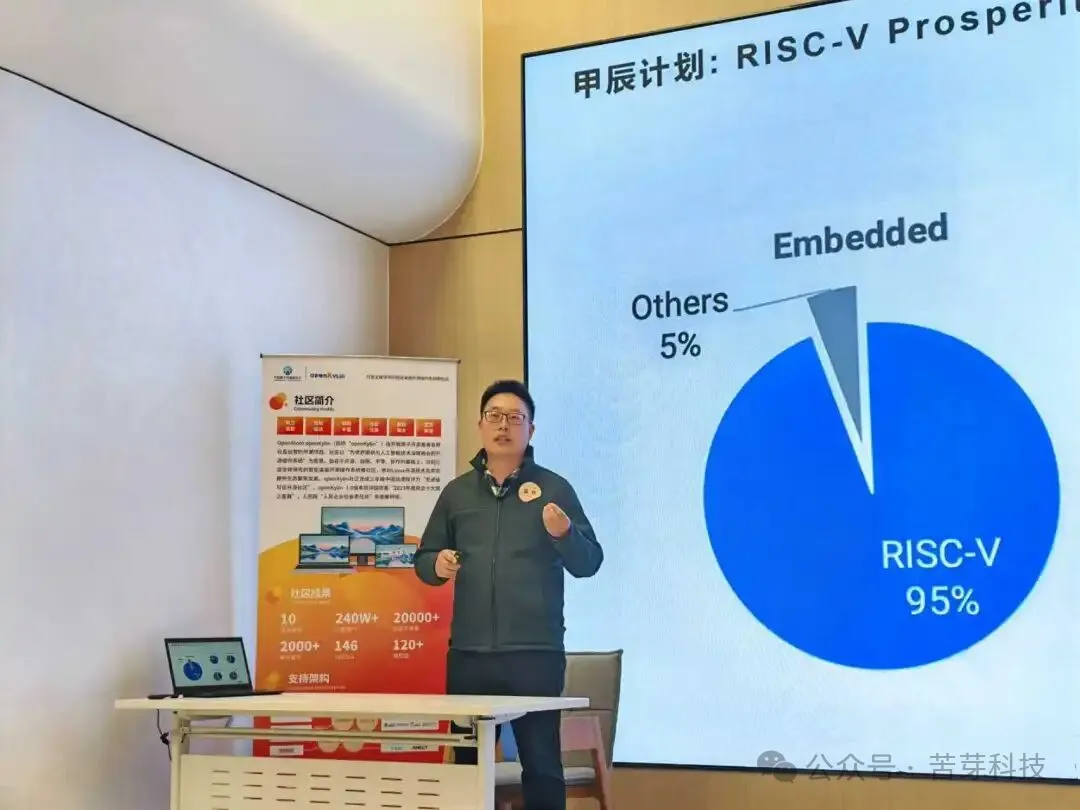
Wu Wei, RISC-V Foundation Ambassador and Co-founder of Kubuds Technology Shanghai, in his keynote speech titled “An Overview of the Global RISC-V Ecosystem”, focused on reviewing the milestone progress of the global RISC-V software ecosystem over the past year, and specially showcased the latest breakthrough achievements of domestic teams in fields such as RISC-V+AI, robotics and automotive electronics. He also introduced the progress and breakthroughs of the global RISC-V community in the past year, and highlighted the achievements of various member units of RISC-V Prosperity 2036 over the past year, including the steady improvement of openKylin’s visibility in the RISC-V International Foundation and other encouraging results.
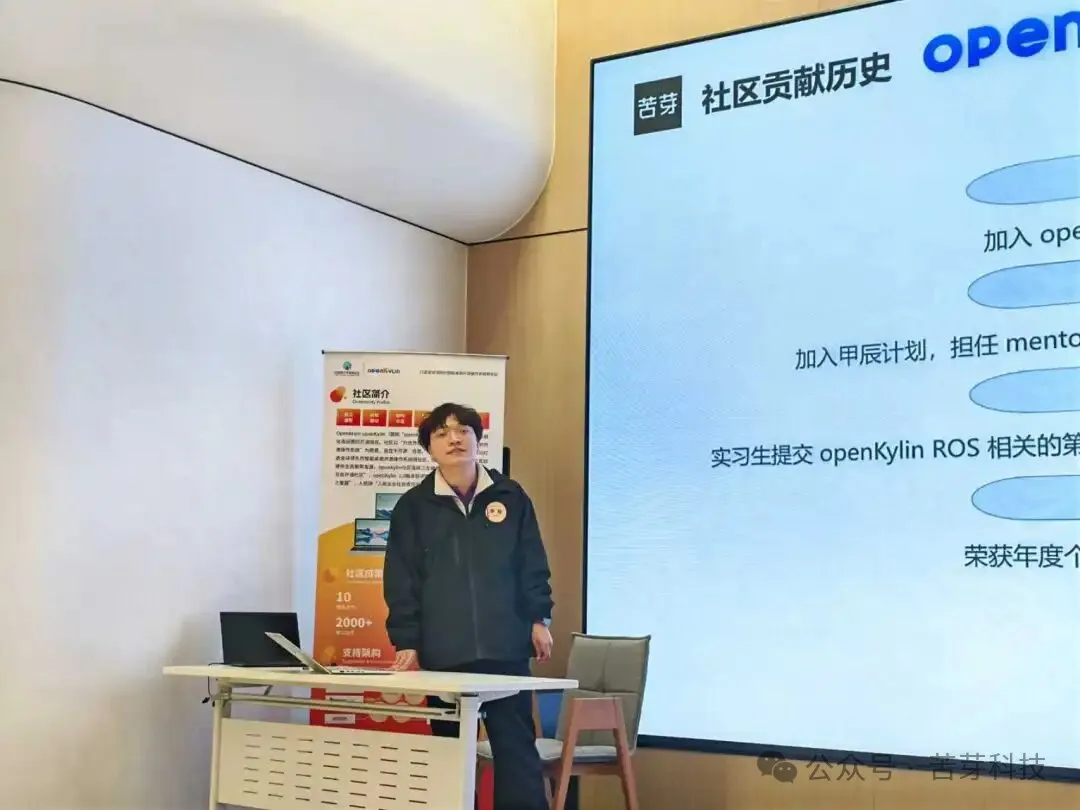
Li Cheng, openKylin ROS SIG Owner and Engineer at Shanghai Kubuds Technology, in his presentation “Kubuds Assisting in ROS and openKylin Ecosystem Co-construction,” reviewed the establishment of the ROS SIG within the community after joining, active participation in community contributions, and the significant breakthrough achieved in October 2025—successfully running the classic ROS application “Turtlesim” on openKylin. In the future, the ROS SIG will focus on adapting more software packages, maintaining upstream updates, and creating demonstration demos based on openKylin and development boards to continuously promote the development of the ROS ecosystem within the community.
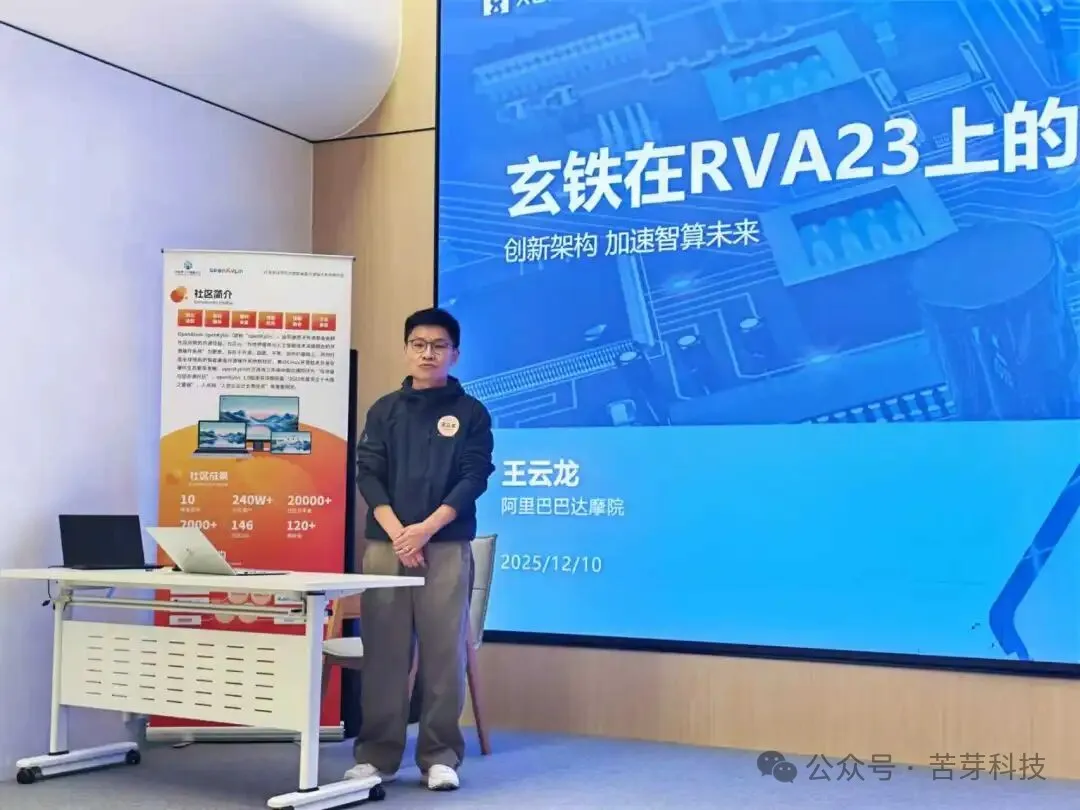
Wang Yunlong, Senior RISC-V Technical Expert at DAMO Academy XuanTie, in his keynote speech titled “Progress of Xuantie’s Software Construction on RVA23”, systematically reviewed the in-depth cooperation achievements between Xuantie and openKylin in RISC-V ecosystem construction, focusing on showcasing the breakthrough progress of both parties in high-performance desktop operating system optimization, mainstream application software porting and adaptation, and AI software stack collaborative development. Meanwhile, he disclosed for the first time Xuantie’s cutting-edge construction of the RISC-V RVA23 software stack: covering architecture standard formulation, firmware productization development practice, core contributions to domestic open-source operating system communities, and in-depth software optimization technologies for RVV vector extensions. Through hardware-software collaborative innovation, we will jointly promote the industrialization implementation of RISC-V in the field of general high-performance computing, and provide key technical support for building a high-performance RISC-V software ecosystem.
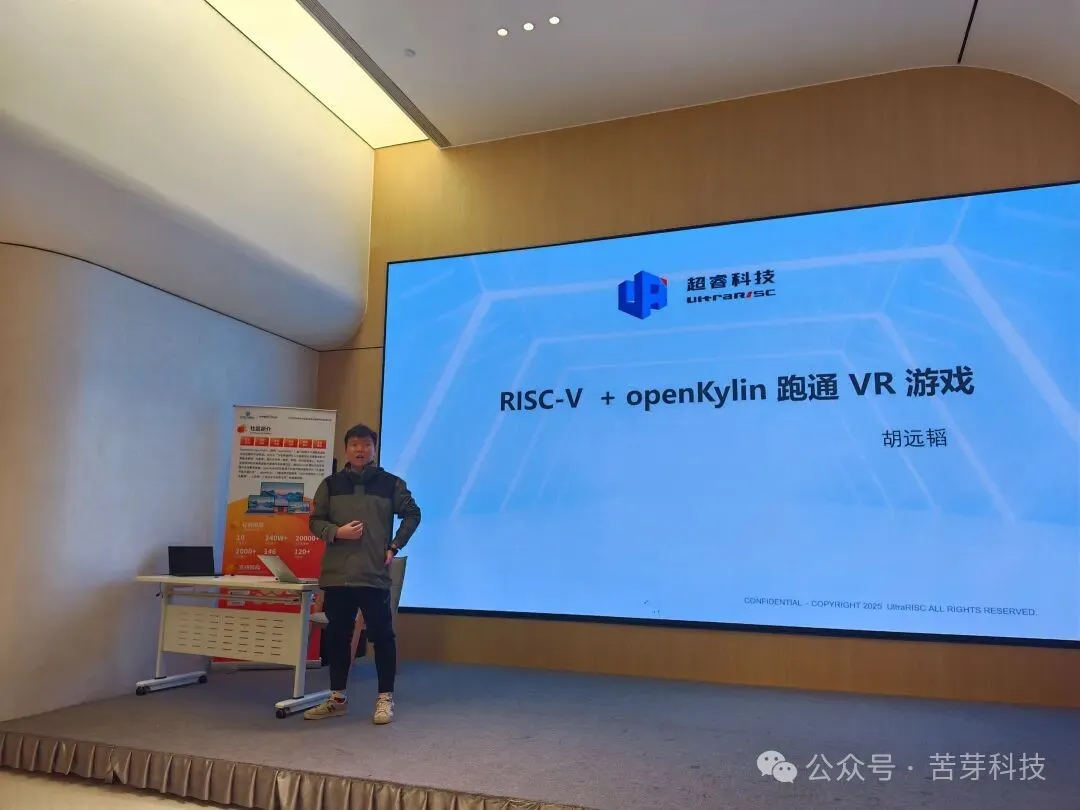
Hu Yuantao, Senior Software Engineer at UltraRISC Technology, in his keynote speech titled “Running VR Games on RISC-V + openKylin”, focused on introducing a full-stack open-source VR solution based on RISC-V (DP1000) + openKylin. By integrating the Godot open-source engine, WiVRn open-source streaming tool and rvsaber rhythm game, openKylin + UltraRISC has successfully connected the complete link from underlying hardware to upper-layer applications, verifying the operation capability of the RISC-V ecosystem in the field of VR games.
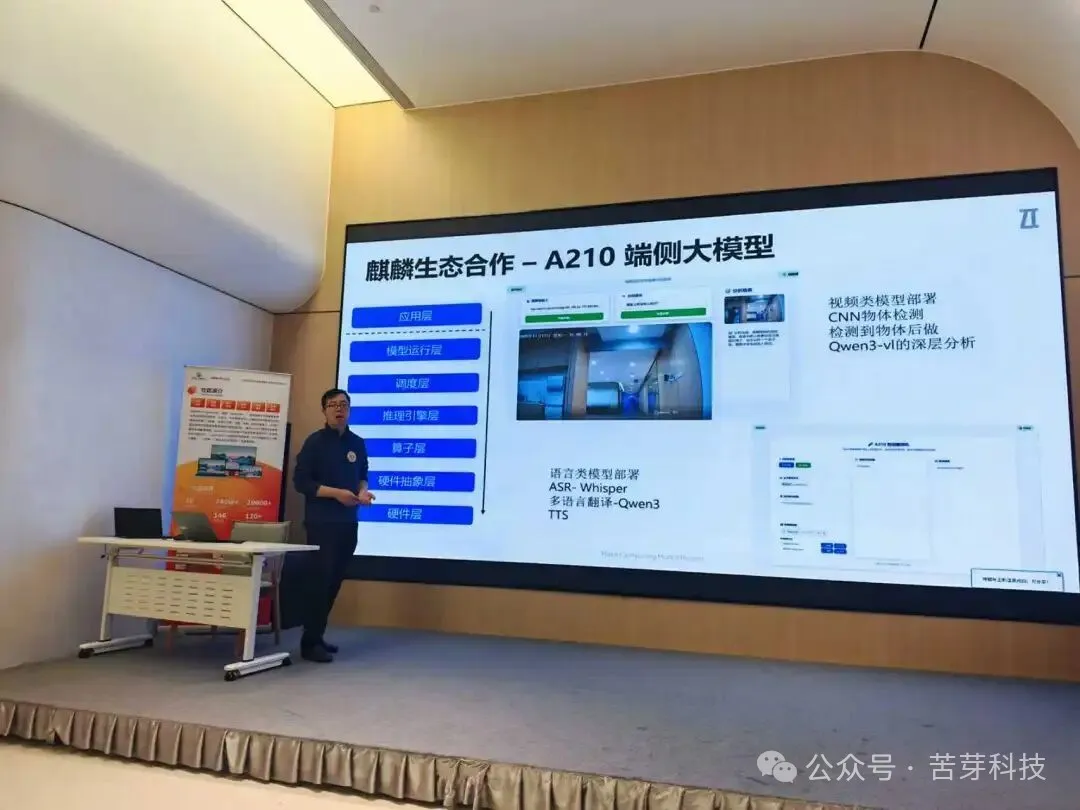
Cheng Yu, Product Manager at Zhihe Computing, in his sharing titled “Zhihe Computing and openKylin Ecosystem Cooperation Sharing”, emphasized that as a leading domestic RISC-V enterprise, Zhihe Computing has deployed high-performance computing chips for large models such as a210 on the edge side. Meanwhile, it has carried out in-depth cooperation with openKylin to expand application scenarios in products such as cloud terminals and embodied intelligence.
RISC-V Ecosystem Co-construction Discussion Session
During the RISC-V ecosystem co-construction discussion session, participating guests showed great enthusiasm for ecosystem co-construction, actively spoke up and offered suggestions. From multiple dimensions including technological innovation, technical contribution, ecological contribution and market promotion, they shared their respective insights and suggestions on the future of RISC-V based on openKylin and the direction of deeper cooperation among partners. The participating guests reached a high degree of consensus, committing to work together for RISC-V ecosystem co-construction and contribute to building a user-friendly RISC-V ecosystem.
The above article is sourced from openKylin, written by Xiao K